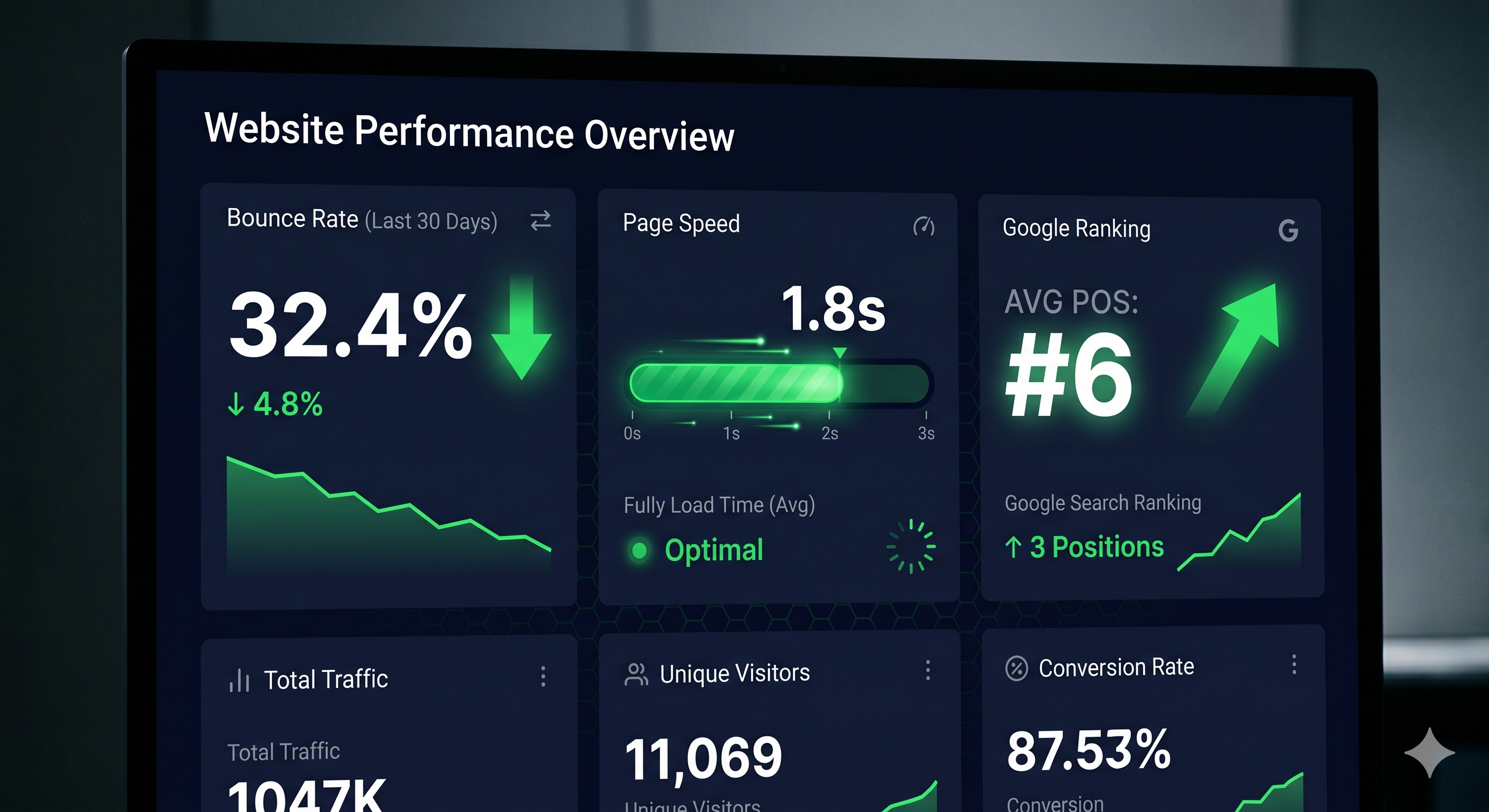
You've probably clicked on a website, waited a few seconds for it to load, and just... closed the tab. No shame in it — we all do it. Now flip that around. That's exactly what your potential customers are doing to your website if it's slow.
A slow website isn't a minor inconvenience. It's a silent revenue killer. And in 2026, where attention spans are shorter and competition is just one Google search away, speed is one of the most powerful business tools you have.
Let's break down why.
The Numbers Don't Lie
Here's something that should make every business owner sit up straight:
- 53% of mobile users abandon a site that takes more than 3 seconds to load.
- A 1-second delay in page load time can reduce conversions by up to 7%.
- Google uses page speed as a direct ranking factor — slow sites rank lower, period.
These aren't hypothetical stats. This is real money walking out the door every time your homepage takes 6 seconds to appear.
Speed = First Impressions
Your website is often the first interaction someone has with your business. Before they read a single word, before they look at your pricing, before they even know what you do — they're already forming an opinion based on how fast your site loads.
A fast website signals that your business is professional, reliable, and cares about the user experience. A slow website signals the opposite, even if your product or service is genuinely excellent.
Think of it like this: if you walked into a store and stood at the entrance for 5 seconds before anyone acknowledged you, you'd probably turn around. Your website is your digital storefront. Make sure the door opens quickly.
Google Rewards Fast Websites
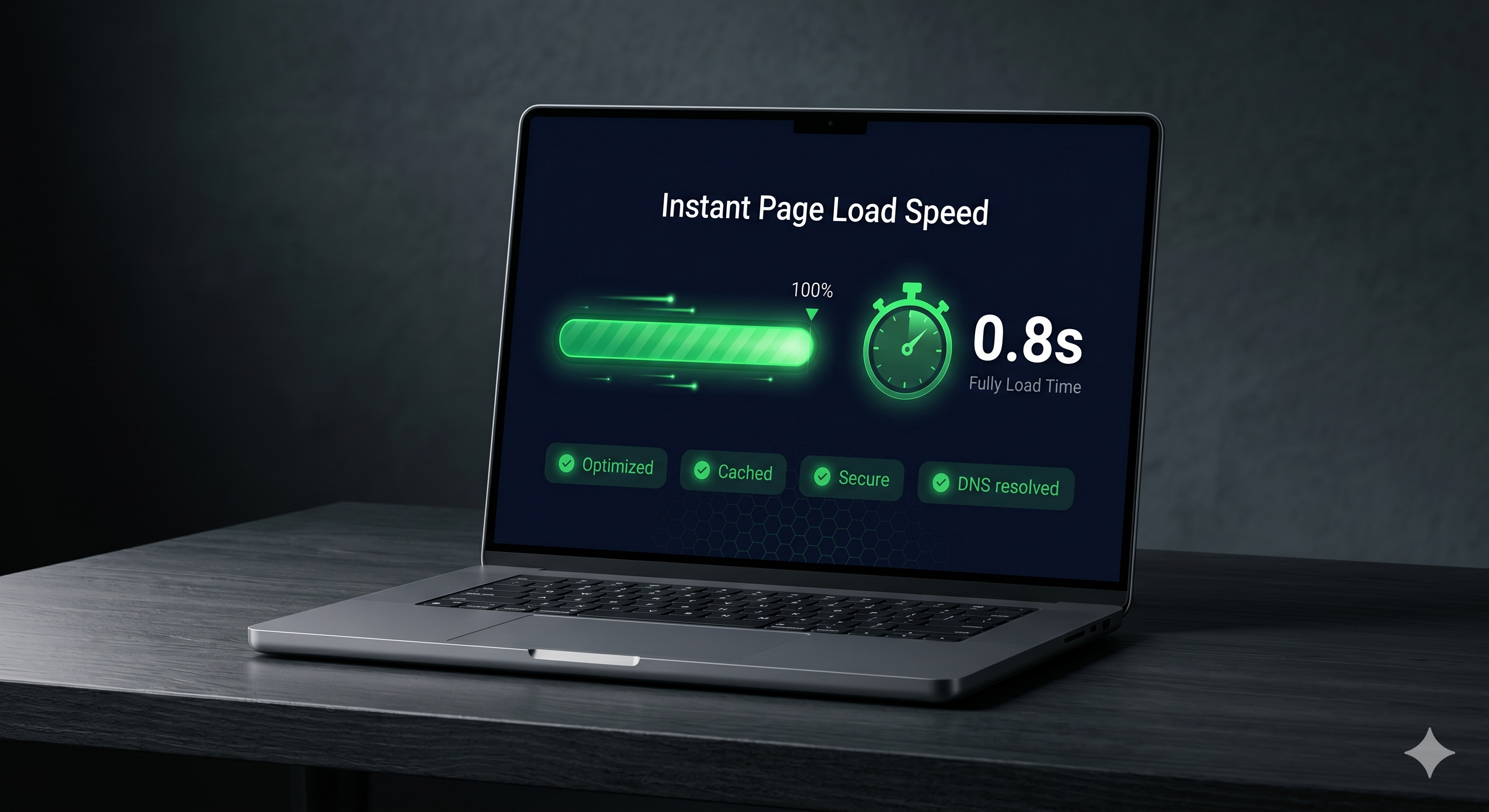
If your business depends on organic traffic (and most do), speed matters for SEO. Google's Core Web Vitals — a set of metrics that measure loading speed, interactivity, and visual stability — are now official ranking signals.
What this means practically: a faster website is more likely to show up higher in search results. And the higher you rank, the more clicks you get, the more leads come in, the more revenue you generate.
Investing in website speed isn't just a tech upgrade. It's an SEO strategy.
Mobile Users Are Unforgiving
More than 60% of web traffic now comes from mobile devices. Mobile networks can be slower and less stable than desktop broadband, which means your site needs to be optimized even more aggressively for mobile performance.
A website that loads beautifully on a laptop but crawls on a phone is losing more than half your potential audience. Mobile-first isn't a trend anymore — it's the baseline.
What Makes a Website Slow?
If you're wondering whether your website has a speed problem, here are the most common culprits:
Unoptimized images — Large image files are the number one cause of slow load times. Every image on your site should be compressed and served in modern formats like WebP.
No caching — Without proper caching, every visitor forces your server to rebuild the page from scratch. Good caching means returning visitors get a near-instant experience.
Too many plugins or scripts — Every third-party script (chat widgets, tracking pixels, pop-up tools) adds load time. If you're running WordPress with 30 plugins, you've got a problem.
Cheap hosting — Budget hosting is fine for a personal blog. For a business website? You need a server that can handle real traffic without breaking a sweat.
No CDN — A Content Delivery Network serves your website from servers closest to the user's location. Without it, a visitor in Mumbai waiting for content served from a server in the US will always feel that distance.

How Fast Is Fast Enough?
The benchmark to aim for:
- First Contentful Paint (when the page starts showing content): under 1.8 seconds
- Largest Contentful Paint (when the main content loads): under 2.5 seconds
- Time to Interactive (when the page is fully usable): under 3.5 seconds
You can test your website right now using Google's free tool at pagespeed.web.dev. If you're scoring below 80 on mobile, it's time to take action.
What You Can Do About It
The good news is that most speed problems are solvable. Here's where to start:
- Audit your site — Use PageSpeed Insights or GTmetrix to identify exactly what's slowing you down.
- Optimize your images — Compress every image before uploading. Use lazy loading so images below the fold don't load until the user scrolls to them.
- Switch to better hosting — If you're on shared hosting, consider moving to a VPS or a platform like Vercel, Netlify, or a managed cloud provider.
- Reduce third-party scripts — Audit every plugin and script on your site. Remove anything that isn't essential.
- Consider a rebuild — Sometimes the fastest fix is starting fresh with a modern, performance-first tech stack.
The Bottom Line
A fast website isn't a nice-to-have. It's a business asset. It keeps visitors on your site longer, converts more of them into customers, helps you rank higher on Google, and builds trust from the first second.
If your website is slow, you're leaving money on the table — quietly, consistently, every single day.
At STAKVAX, every website we build is engineered for speed from the ground up. Lightning-fast load times aren't a feature we add at the end — they're baked into how we work.
Want to know how fast your website actually is? Drop us a message and we'll run a free audit for you.